This article was prepared by the Romi Center team.
KPI is the abbreviation Key Performance Indicators, which is translated from English means “key performance indicators”. Efficiency indicators are the components of the strategic plan, which the company plans to implement at a certain period of time. In other words, KPI is a display of a result that can be evaluated quantitatively. How to use performance indicators, the Romi Center team will tell.
Thanks to key performance indicators, the organization can evaluate how close it is or, on the contrary, far from the goal facing it. The development or promotion strategy depends on what the performance indicators are set to assess, and includes 5-7 KPIs.
Imagine that according to the results of the reporting period, you need to inform colleagues and management about how your project is being implemented. You understand that everything goes well, the necessary goals have been achieved. But how to confirm this with facts? What to measure the level of success in the project or the degree of problems that have arisen?
KPI is the answer to these questions. Thanks to these indicators, you will measure the necessary aspects of performance. And also show how close to the goals that you formulated at the start. Since the assessment is carried out numerically, KPI can be expressed in the form of graphs, diagrams and other visual ways.
Содержание
KPI and performance indicators: difference
For the development of the company in the future, you need to understand how to measure success within the framework of strategic planning. To continue or correct the selected path, it should be assessed whether the correct decisions are made. However, do not analyze all available data. The placement of priorities is of key importance: which indicators are more important than others.
The terms “performance indicator” and “key performance indicator” are sometimes confused. The difference in the word “key” means the choice of those parameters that are important for this company precisely during this period of time. It is the 5-7 KPIs that demonstrate the implementation of the plan that it is important to pay increased attention.
Unlike KPI, effectiveness indicators report the results of standard business processes, but are not so important metrics that need to be monitored constantly. They increase the productivity or value of work, but are not critical. Also, performance indicators do not always relate to the values that the company planned to achieve.
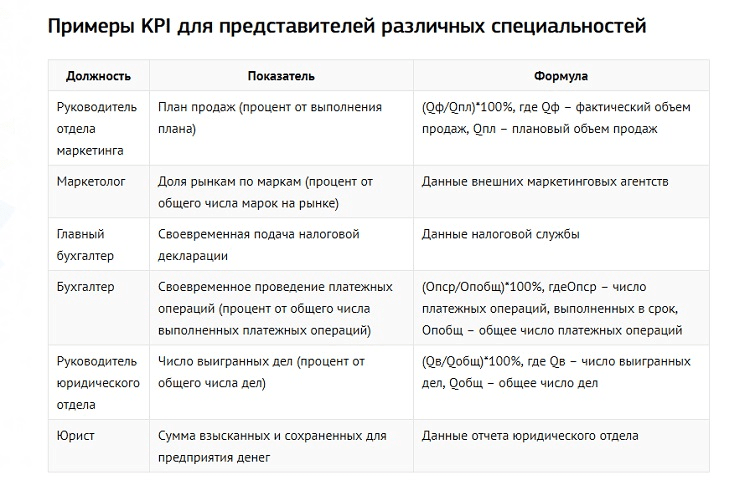
That is, any KPI is a metric of effectiveness, but not every such metric refers to KPI.
What to choose as key indicators? Depends on the current business priorities. Consider examples.
Example
The company plans to increase 20% compared to the previous month. One of the KPI can be formulated as «new transactions this month.» And simply an indicator of efficiency would be responsible for a less important parameter, for example, the “site traffic”.
The choice of suitable KPI
If the company begins to use key performance indicators, then it is important for it to clearly define priority plans and ways to achieve them.
How suitable is this or that key performance indicator? It should be:
- specific;
- measurable;
- achievable;
- relevant;
- tied to time;
- Available to assessment, including again.
Another common method for determining the KPI is “six A” (the first letter for the following terms in English): coherence, achievability, acute necessity, accuracy, practical expediency and survivability.
We will analyze in more detail the factors that are taken into account when choosing a KPI for business.
Determination of indicators for analysis
Properly assigned KPI should clearly reflect the value that should be measured. The more information is contained in the indicator, the better for business. In order not to get confused, it is convenient to divide the KPI into several main categories.
- Activity indicators. Reflect the dynamics of movement to the goal. For example, these are actions, processes, the number of potential customers.
- Indicators of the result. This is relative progress in comparison with the planned result. Expressed as a percentage or share. An example is an increase in income compared to the previous period or with the planned amount of profit.
- The project indicators. Relate to the progress of a particular project and are expressed as a percentage of execution or summarized results. For example, what percentage of actions to close the project has already been completed.
- Indicitors goals. This is a numerical result regarding the date on which the goal was set. For example, the strategic goal was to enter the income level of 40 million rubles by December 1, 2020. KPI goals will show how it was realized by the desired date.
Setting a measurable target
Regarding the KPI, the goal is called the numerical parameter that the company wants to achieve. The goal must be determined in the form in which the metric is measured. For example, if the indicator is expressed as a percentage, then the goal should be set as a percentage. And for a numerical meaning, the goal must be set a specific number.
The choice of data sources
Each KPI relies on the initial data on the work of the company. Control that the source of this information and the calculation formula for the entire team be indicated in the plan.
The appointment of a responsible for KPI and the frequency of control
The key performance indicators must be monitored throughout the work. A specific person must be assigned to the role of the responsible person who will collect data, control the results and provide reports. The best frequency for KPI control is the best.
Checking the selected KPI
It is difficult to unequivocally answer which KPIs were selected correctly, and which will have to be changed after the first report. But in order to make the adjustment as little as possible, roll back with standard requirements for key performance indicators. KPI should:
- Show whether this strategy is working now and in the future;
- concentrate employees' attention on indicators important for the company;
- contribute to the creation of transparent and understandable reporting;
- give regular information about effectiveness;
- display reliable data on current business processes;
- lead from intermediate results to the final: show the speed of achieving the goal.
If you tested your KPI on this list and they meet these requirements, then the indicators are selected correctly. However, you should take into account the specifics of your business, the scale of development plans and other individual characteristics. There is no only faithful guide to action here.
KPI in Internet marketing
Marketers use dozens of key indicators of the effectiveness of advertising campaigns and other activities. However, the KPI list varies depending on the specific sphere of business and its specifics.
We will analyze the seven common KPI categories.
- Trafficking. They distinguish branded, from search engines, contextual advertising, social networks. Traffic is evaluated by attendance, views of pages, sources, clickability (CTR).
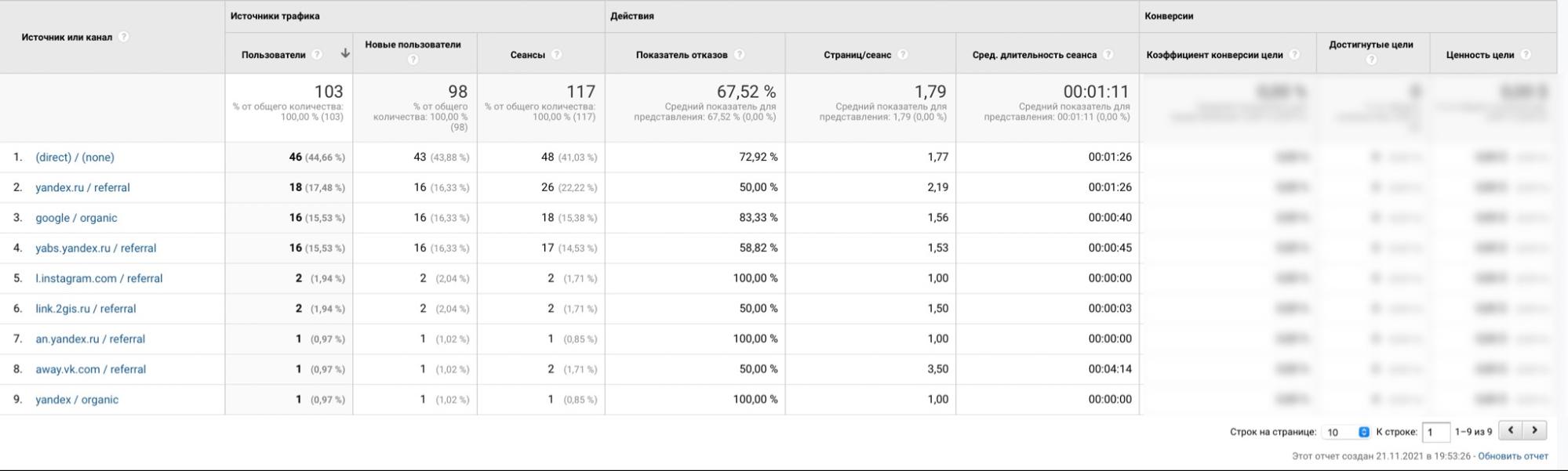
- User behavior. Includes calculations of the percentage of failures, time on the site (TSS), the depth of viewing (PPV).
- Conversion. The conversion coefficient is calculated as the number of visitors who have performed the target action divided by the total number of visitors. Often, an indicator of achievement of goals is also calculated.
- The cost of attracting. Cash costs are calculated for one visitor (CPV), for one click (CPC), for one order (CPO), for one lead (CPL).
- Middle check. The calculations of the average price for the order on the site (AOV) are used. Thanks to them, marketers optimize advertising costs and carry out pricing.
- Return of investment. This is an indicator of the payback of investments — for example, in advertising, the construction of the office, the purchase of equipment. The investment refund indicator — ROI — is equal to expressed as a percentage of the ratio of net profit and investment.
- Repeated visits and sales. Most often use the return indicator to the site (RVR) and the lifetime value of the client (LTV). The last indicator is calculated only for regular customers.
Web analytics systems allow you to track the main key performance indicators. The most popular system is Google Analytics. This is a built-in web analytics in which you can calculate:
- clicks;
- unique users;
- shows;
- involvement — depth of viewing and time on the site;
- clickability;
- percentage of failures;
- conversion coefficient;
- a price for a click;
- fee for action and much more.
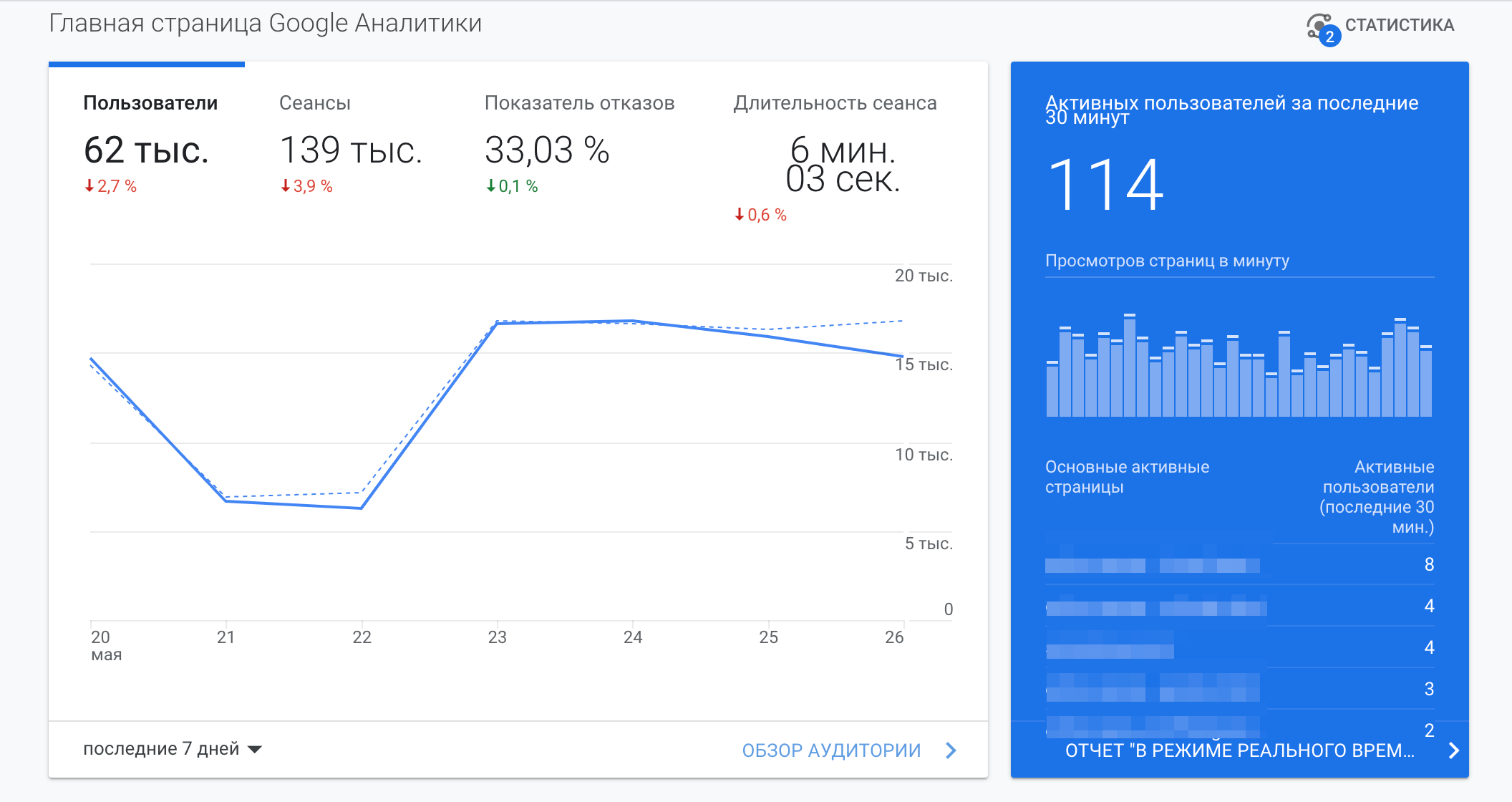
These metrics give a general idea of the situation with advanced advertising and sales. But if you want to hold your hand on the pulse of all marketing KPIs, you need end -to -end analytics — combining data from CRM, several advertising sites and other tools
What indicators will become available to you:
- the cost of attracting a lead;
- investment payback;
- The profitability of advertising costs and other important metrics.
We build a strategy with KPI
The main goal of key performance indicators is to help make reasonable decisions and increase business efficiency. It doesn’t matter if you chose KPI to implement global strategic goals or to solve the current tasks of the team. We offer you 3 tips on building an effective strategy using KPI.
1. Constantly monitor the changes
Continuous control over the KPI gives information about whether everything works as planned. The prompt response to changes in key performance indicators is confidence in the correctness of the path and on time made adjustments, which means saving time and money of the company.
Example
For your online store, an important KPI is the percentage of purchase refusal during placement of the order-“Boiled basket”. You have changed the design of the order page — and the number of “abandoned baskets” increased sharply. Since you noticed the problem promptly, you can correct it before it leads to losses.
2. Consider the team
Inside the team should come to a consensus on which indicators are important and which can be considered as secondary. This will develop a unified KPI control strategy and maintain them at the right level. When the company changes key performance indicators or even adjusts the strategy, the leadership must quickly convey information to employees. So the whole team will immediately rebuild the work and harmoniously introduce new standards. The exchange of key information within the company will allow you to discard unnecessary data and establish effective work.
Example
You always strive to achieve more advertising shows on the network. Now, the leadership decided to pay attention to other KPIs — an indicator of the clickness of ads and the level of conversion to the order. In accordance with this change, marketers should immediately start work in a new mode. As a result of the shows, it can become less, but the number of real transactions should grow.
3. Measure success in numerically
The goals set by the company should not be generalized and blurry. Suppose you have determined the goal of «becoming the leader in the microelectronics market.» How to understand that the goal has been achieved? How to measure how close to its achievement? Obviously, work at a loss is unlikely to be an indicator of the goal achieved. However, even a high level of income is not evidence that you are a market leader.
KPI demand that the goals be clear and measurable. In the case above, you can choose the wording «have more customers than your direct competitors.» Or “receive more income in a year than other manufacturers in the country”, etc. Constant tracking of your KPI will quantify how close to the leadership of the market are.
By choosing key performance indicators for business, you yourself determine how to measure your achievements. Actual and reliable data will help you evaluate progress, adjust the strategy or get the expected profit.
Develop a business with KPI tracking
Key performance indicators are numerical metrics of the result or actions that are important for business. With the help of KPI, you detailed and reasonably monitor progress in achieving the goal. Study the rules for working with KPI and achieve success even faster and with lower costs!